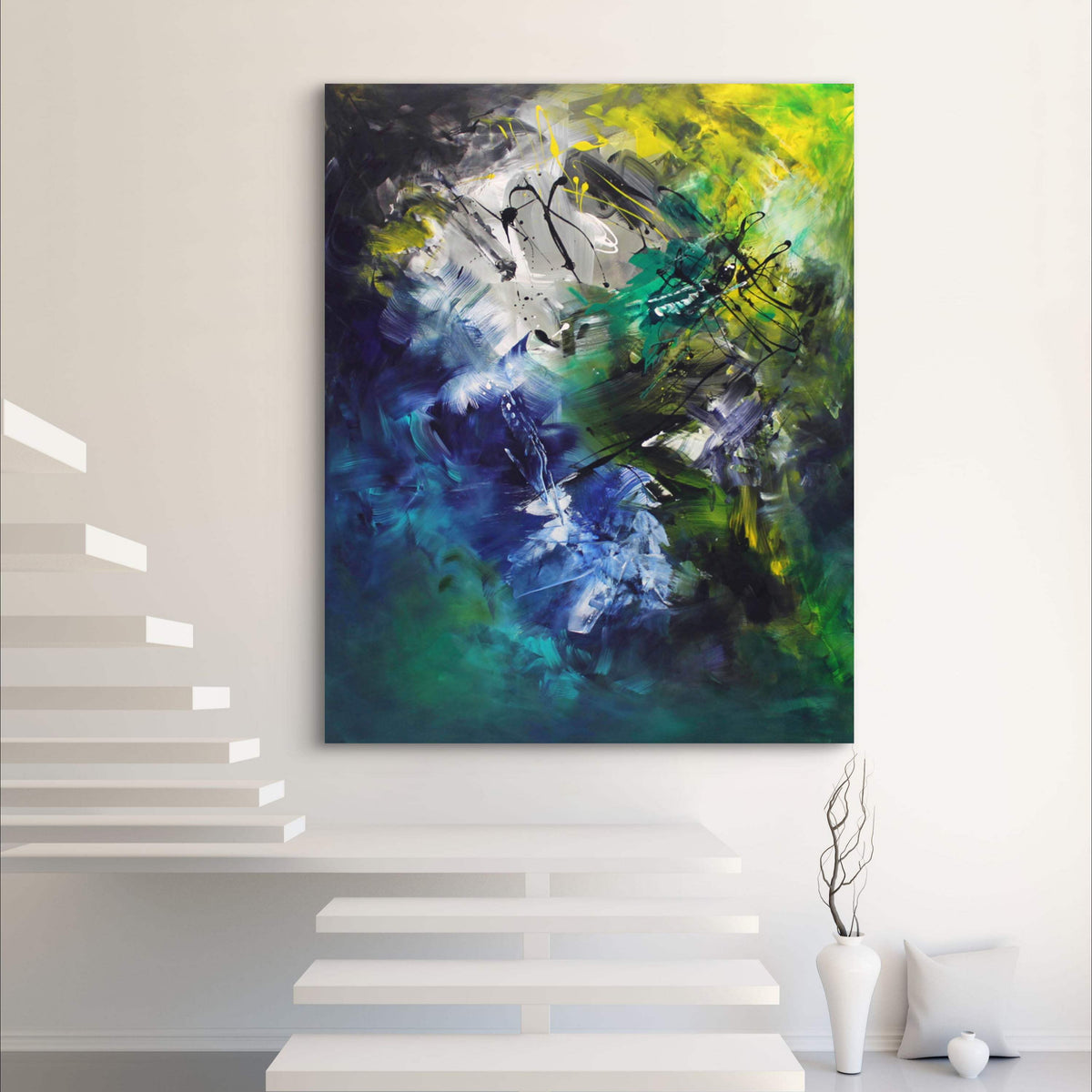
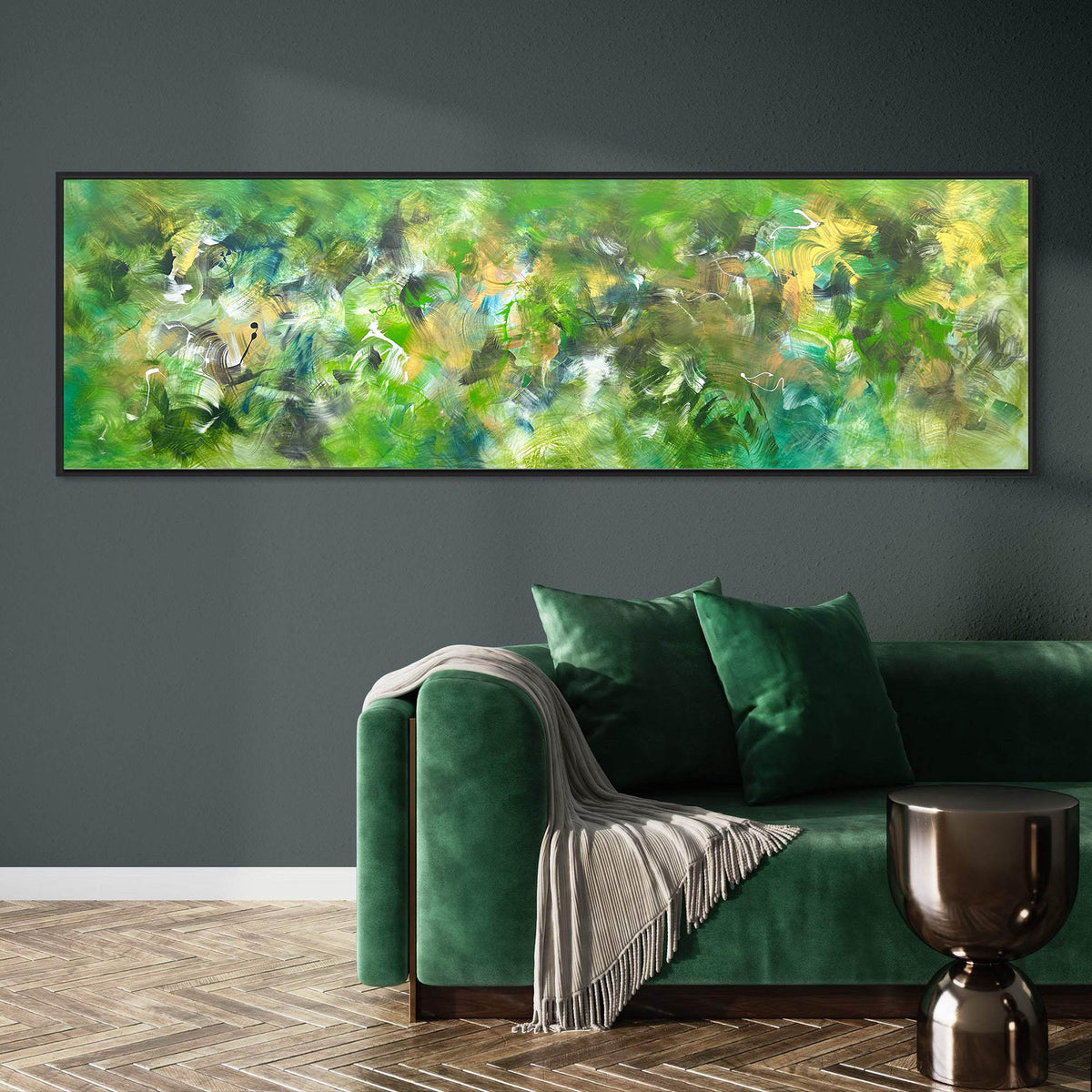
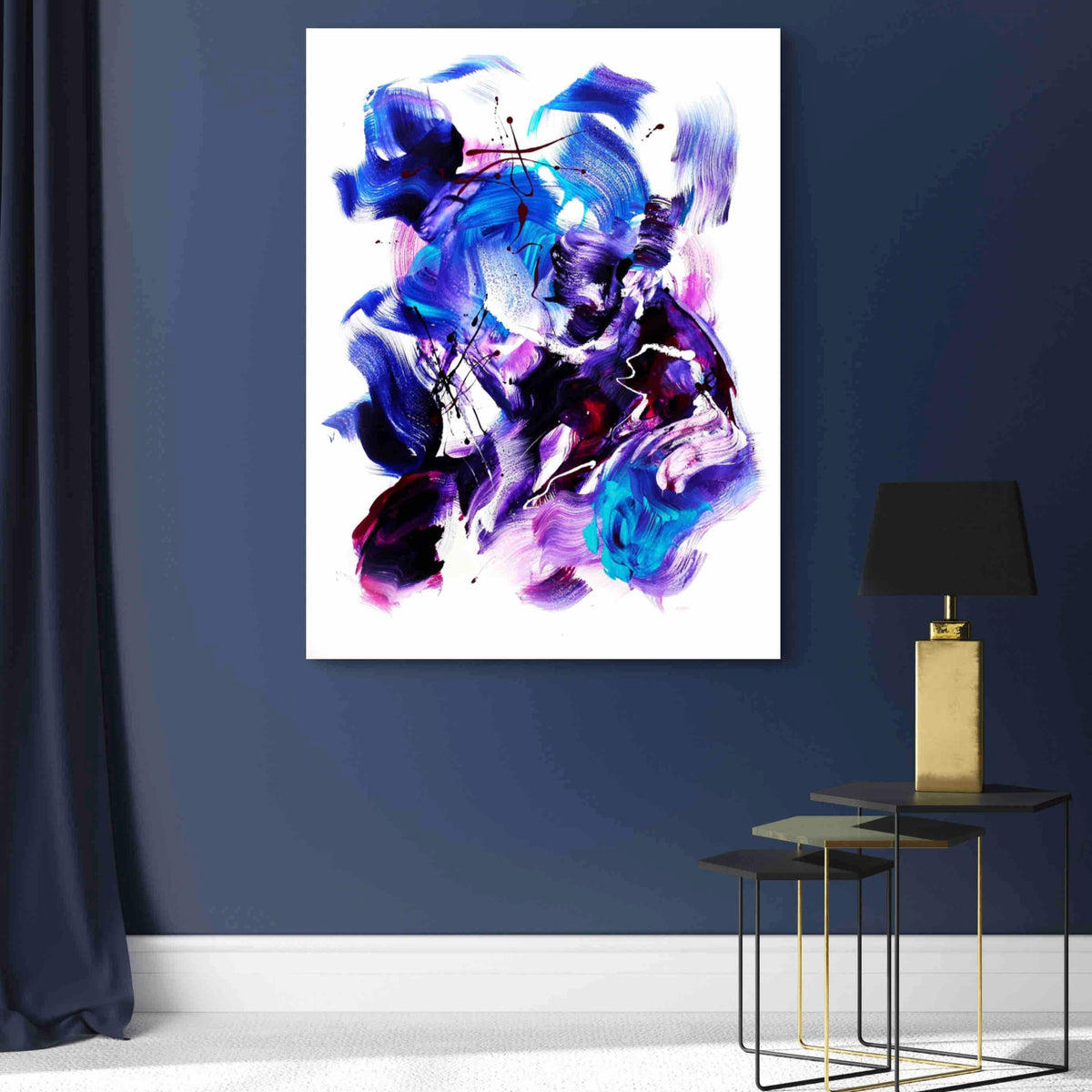
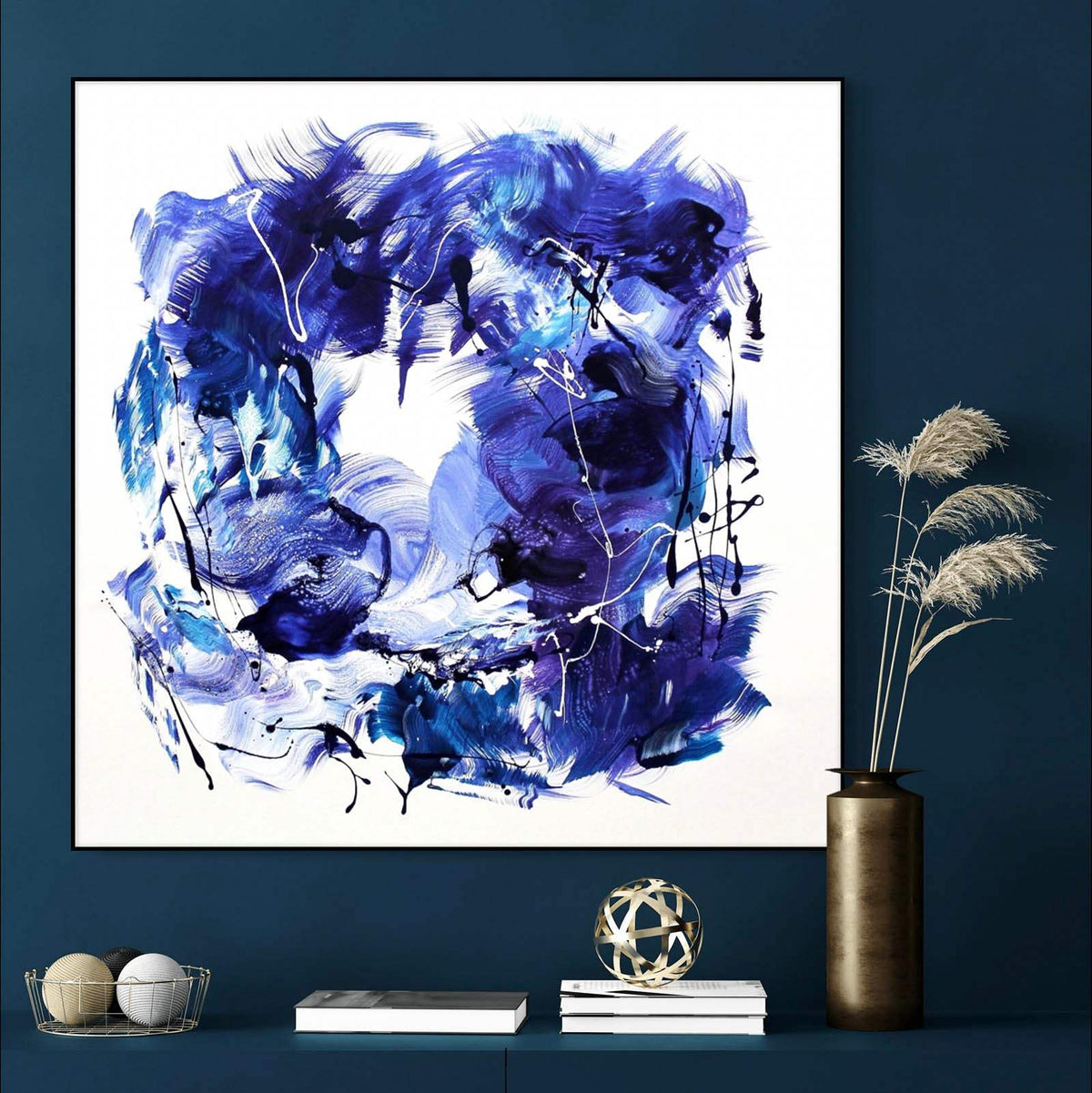
Original blue, green and teal abstract paintings, from deep navy and emerald to soft aqua. Cool colour brings calm and a sense of space to a room.


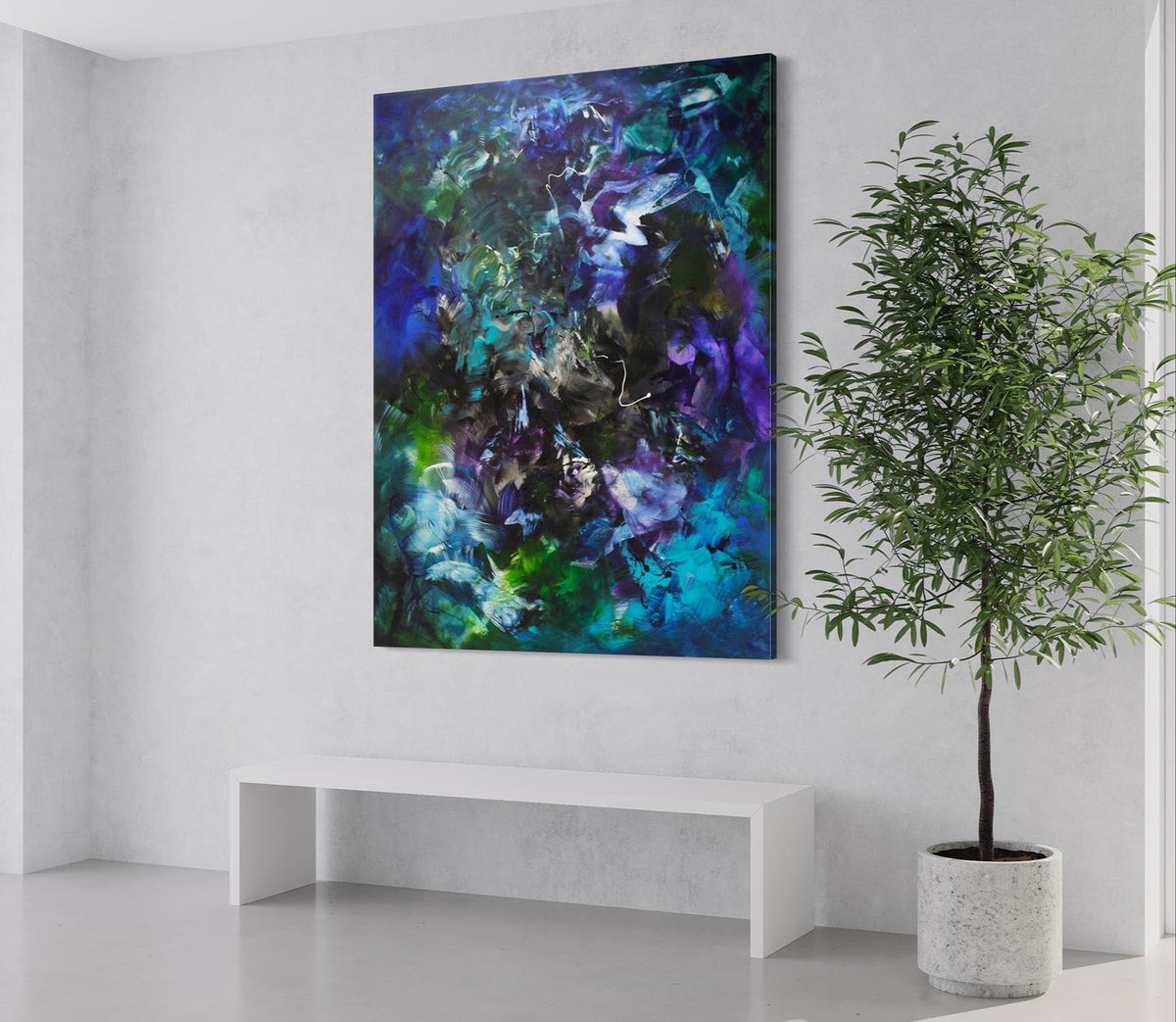
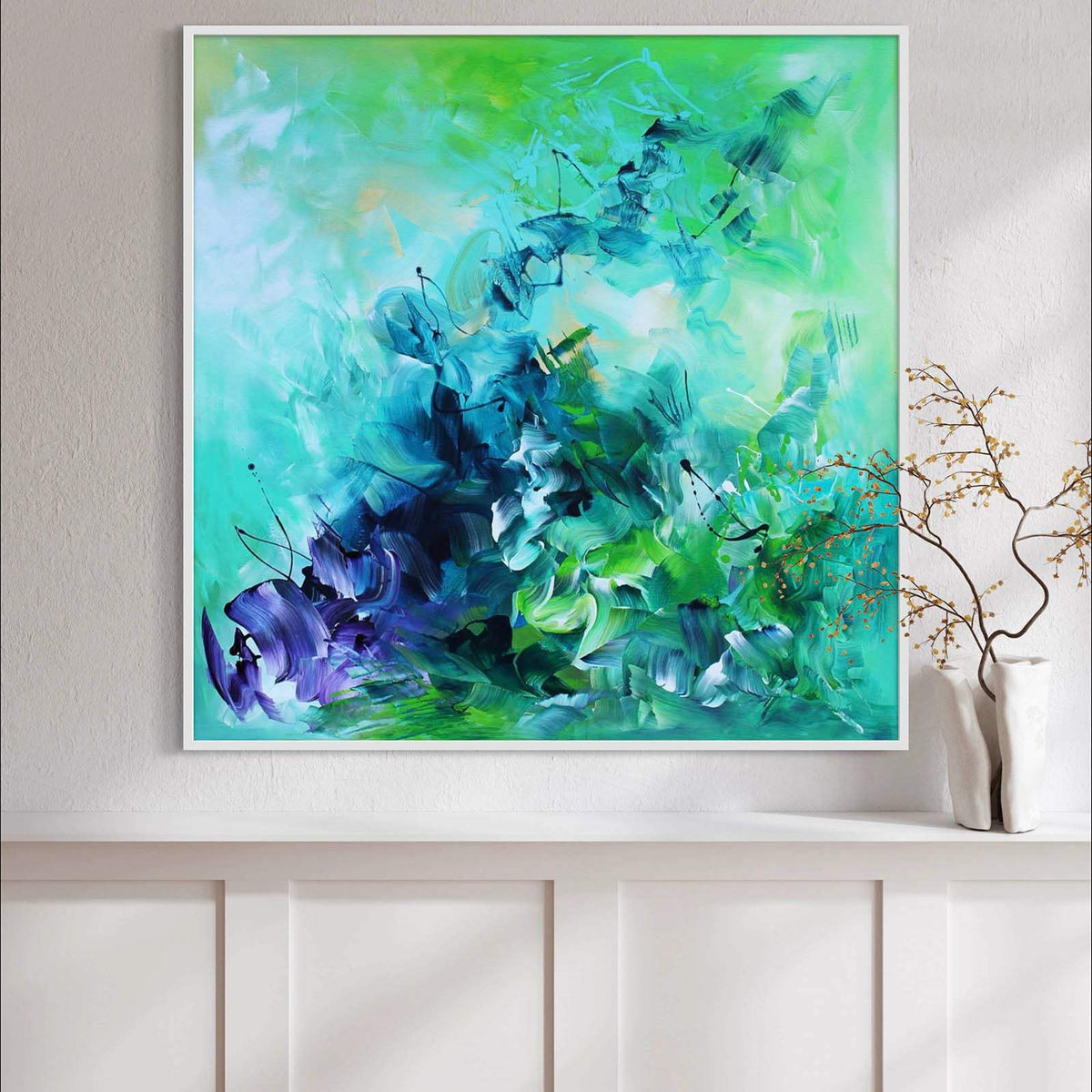

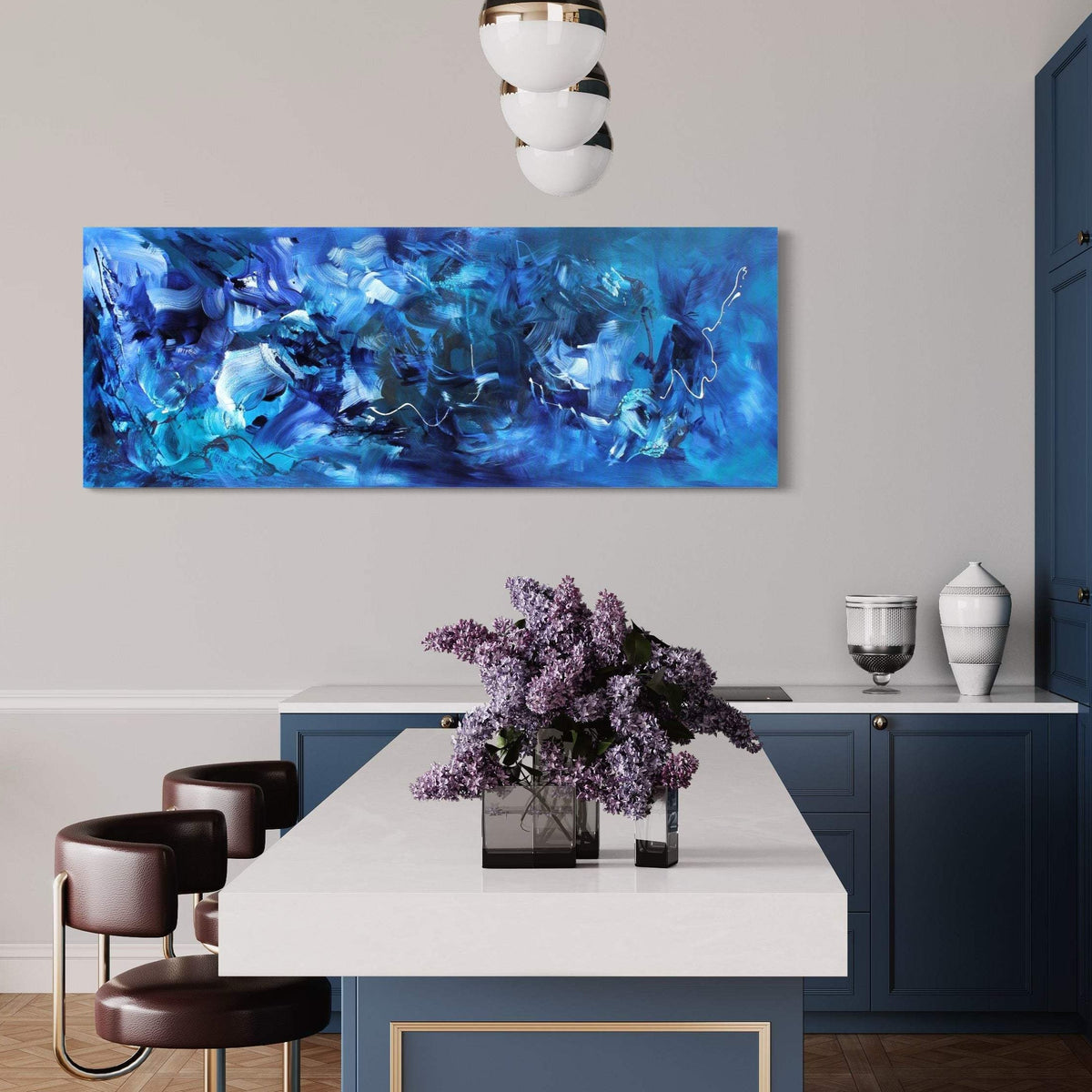

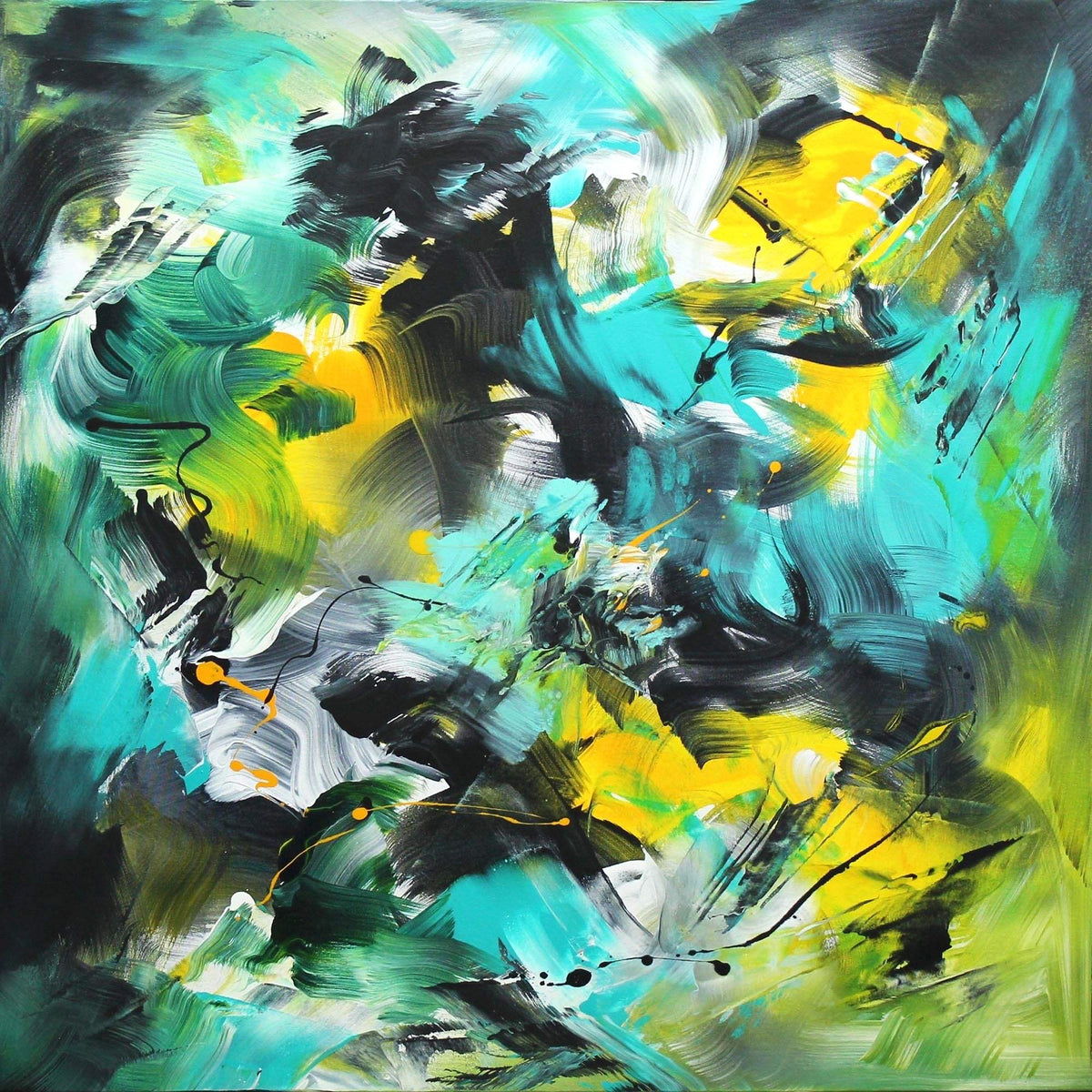
Blue and green abstract paintings
Blue and green run through much of Paresh’s work, often bringing to mind water and open sky. He layers them intuitively, letting one colour settle before the next, so the surface seems to shift as you walk past. Many of these paintings are large, made to bring depth and stillness to a living room, bedroom or workplace.
Browse all original paintings or our large paintings.
Choosing a blue, green or teal painting
Look at the colours already living in your room: the grain of timber, a warm white wall, a favourite piece of fabric. Deep blue can give a pale space depth; emerald and teal bring a richer note beside natural wood or soft sage. Compare the painting in daylight and evening light, and check its dimensions before deciding where it will hang.
For three different expressions of this palette, explore the ocean blues of Ocean’s Embrace, the layered greens of Rainforest Breeze, or the teal and taupe gestures of Emerald Echoes.
Explore square abstract paintings to compare formats, or arrange a London studio visit to see selected works in person.
Questions collectors ask
Which rooms suit blue and green paintings?
Bedrooms, studies and offices, where a calmer mood is welcome, and living rooms with good natural light. Blue and green sit beautifully with wood, white and grey.
Will the colours look the same in person?
Every painting is photographed with care, but screens vary, so blues and teals can look slightly different on your device.
Can I see a painting in person?
Yes. Private visits to Paresh’s London studio are available by appointment.
About Paresh Nrshinga FRSA
Paresh Nrshinga FRSA is a London-based abstract artist whose paintings explore colour, movement and emotion. Drawing and sketching from childhood, he began painting abstracts in 1998 and founded Art Nrshinga in 2005. Each original develops intuitively, giving collectors room to find their own connection with the work.