Art Nrshinga Journal / In conversation
Interview
with Singulart
An interview arranged by Singulart, exploring Paresh Nrshinga's artistic journey, creative process and future directions.

1. What are you currently exploring in your artistic practice that excites you the most?
At this stage in my artistic journey, I'm increasingly drawn to exploring the relationship between restraint and expression, particularly the quiet intensity that can exist within a painting.
For many years, my practice has been characterised by bold colour, energetic brushwork and an almost instinctive approach to the canvas. There was a certain urgency in the way I painted, where gesture and emotion unfolded spontaneously, often with little hesitation.
More recently, my work has been moving towards a quieter, more contemplative language. I'm exploring softer tonal relationships, a more minimalist aesthetic and a greater sensitivity to space and composition. The gestural energy remains, but it has become more measured and deliberate. I'm becoming increasingly conscious of what I choose to leave out, allowing individual gestures and subtle shifts in colour to carry greater emotional weight.
What interests me particularly is that beneath this apparent stillness, there remains an underlying tension. The complexities of everyday life, the emotional demands of an artistic career and the constant dialogue between thought and instinct continue to find their way into the work.
I'm discovering that restraint doesn't necessarily diminish expression. Sometimes, by holding back, a painting can communicate something far more profound. It's this delicate balance between spontaneity and control, stillness and movement, that I find most exciting to explore at the moment.
2. Is there a particular artwork on your Singulart profile that best represents your practice today? Tell us why you chose it.
I would choose A Moment Unscripted, as it reflects the direction my artistic practice is taking today. The minimalist, understated background creates a sense of calm, while the expressive brushstrokes introduce movement, energy and drama.
What excites me is the contrast between simplicity and intensity. The softer colour palette and restrained composition still retain the powerful gestures and underlying drama that my work has become known for. It's an exploration of how minimalism can make an equally powerful statement.

3. What experiences, places or moments have had the greatest influence on the artist you are today?
My fascination with art began at an early age, spending hours in libraries studying the great American Abstract Expressionists. Their monumental canvases, freedom of expression and bold approach to abstraction left a lasting impression on me.
Watching artists' biographies was equally inspiring, revealing not only the joy of creation and discovery, but also the struggles and challenges of dedicating one's life to art. As a full-time artist, I've come to understand and relate to those experiences on a much deeper level.
Travel has also profoundly shaped my artistic sensibility. From the extraordinary art and architecture of Florence to the vibrant colours, sounds, fragrances and atmosphere of India, these cultural experiences have enriched my visual language and continue to influence how I see and interpret the world through painting.
4. Is there a story about your artistic journey that people don't usually know, but that has shaped who you are as an artist today?
When I was about 16, studying at art college, I used to paint portraits of people like James Dean and Marilyn Monroe. I had no real understanding of galleries or art dealers back then. I was simply passionate about art and even tried selling prints through shops like WH Smith, although that didn't really take off.
I actually stepped away from art for a few years, but when I returned, I began exploring abstraction, which completely changed the direction of my work. I started my career as a full-time artist quite literally going door to door, showing people my paintings and trying to make a living from my art.
Over time, that led to working with galleries and exhibiting internationally. It's been quite a journey, with plenty of challenges along the way, but those early experiences taught me a great deal about what it really means to be an artist.
5. Are you currently working on anything you'd like people to know about?
At the moment, I'm working on a new series of larger-scale paintings, which is something I'm really excited about. I'm continuing to explore expressive gestures alongside softer, more subtle blends of colour, allowing the work to develop naturally.
I'm particularly interested in experimenting with different colour combinations, how colours interact, merge and create their own sense of movement and atmosphere. It's fascinating how changing the relationship between colours can completely transform the mood of a painting and tell an entirely different story.

6. As a painter based in the United Kingdom, how do elements of your local surroundings filter into or inspire your artistic vision?
Living and working in the UK, I find the changing seasons and weather have quite an influence on my creative energy. Summer brings a sense of optimism, warmth and vitality, which naturally finds its way into my work. Winter, on the other hand, is a quieter, more contemplative time, when I can really immerse myself in painting and explore ideas on a deeper level.
I work in a studio surrounded by a community of artists, although we often only see each other in passing. The life of an artist can be quite solitary, but in many ways that suits me. I value that sense of solitude, where there are fewer distractions and I can become completely absorbed in the creative process.
7. Can you share what first drew you to painting as your primary medium and how your relationship with it has evolved over time?
In the early stages of my artistic journey, I was very much focused on detailed, refined portraiture and figurative work, where precision and technique were essential. But as I moved towards painting and eventually abstraction, I discovered a completely different sense of freedom.
Abstraction opened up a whole new world of possibilities, allowing me to move beyond representation and express myself more instinctively through colour, movement and gesture. Over time, my relationship with painting has become more personal and exploratory. It's no longer simply about what I see, but what I feel and how I can translate those emotions onto the canvas.
8. Your works often evoke a unique sense of emotion and movement; could you walk us through your creative process and how you channel these feelings onto canvas?
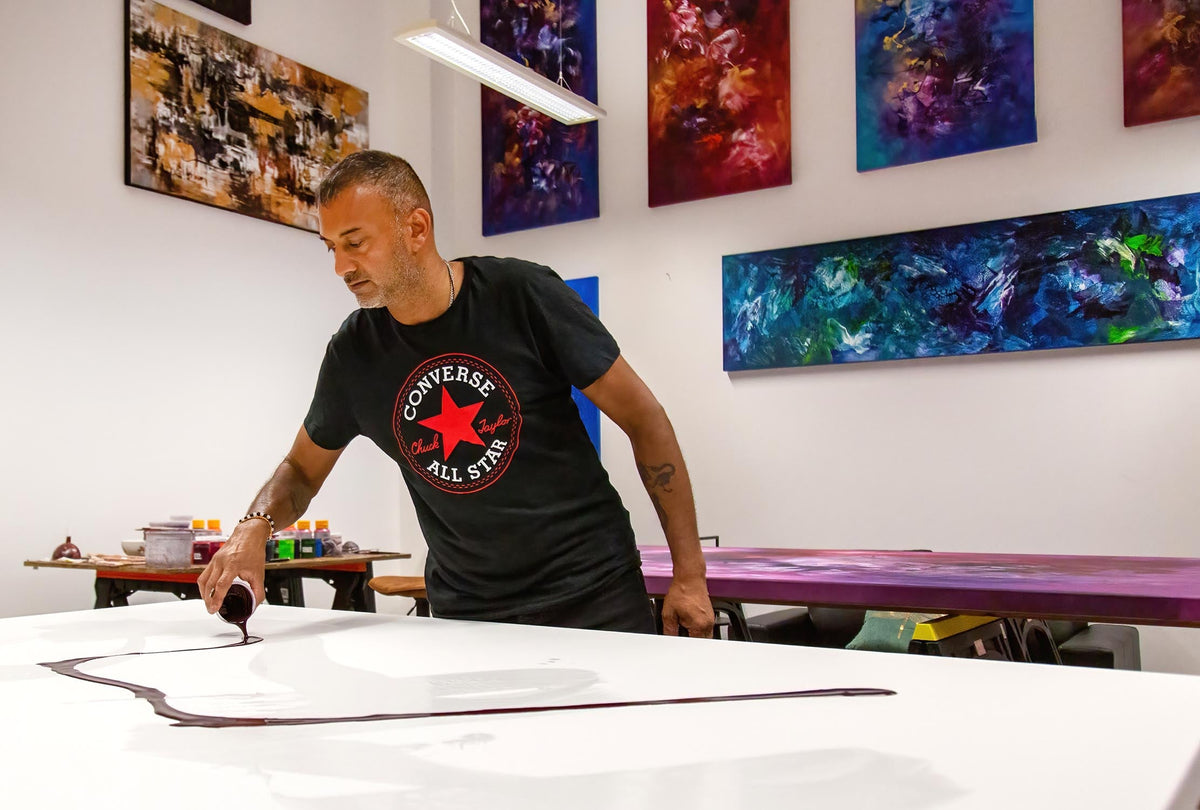
There are several ways I approach a canvas, and I enjoy the different challenges each one brings. Sometimes it's the excitement of the unknown, starting with a blank canvas and allowing myself complete freedom to respond instinctively to what's unfolding. One gesture leads to another, and the painting almost takes on a life of its own.
Other times, my approach is more considered, with initial ideas around colour, composition and direction, although I always leave room for spontaneity and unexpected discoveries.
Commissioned work brings another interesting dimension to my practice. Working with a client's vision, particularly on larger canvases, can push me beyond what I might naturally explore. I enjoy that challenge, and some wonderful new directions and collections have emerged from commissions. Each approach offers its own rewards.

9. Are there any personal experiences or influences outside of the art world that have significantly shaped the way you approach your practice?
Nature, music and fashion have always been important influences in my work. I'm constantly absorbing the colours, forms and atmosphere of the world around me.
Nature, in particular, offers an endless source of inspiration. I love the changing seasons, especially autumn with its rich spectrum of reds, oranges, yellows and ochres. Then there's spring, with its fresh colours and new life. Even the earth, rocks and natural elements reveal beautiful combinations of colour and layers that find their way into my paintings.
Music also plays a big part in my creative process. The rhythm, energy and vibration of sound can really influence my mood and the way I approach a canvas. And, of course, a good cup of coffee always helps!
10. Looking ahead, what themes or ideas are you most excited to explore in your future works?
Looking ahead, I'm excited about exploring new techniques and pushing my work in different directions. I've traditionally painted with the canvas laid flat, so I'm interested in experimenting with painting vertically and seeing how that changes my approach.
I'd also love to revisit my early background in portraiture and figurative art, exploring how those elements might merge with abstraction. Another area that fascinates me is introducing geometric forms and structured lines into my more fluid, gestural work, creating an interesting dialogue between the two.
And, of course, I'm keen to work on a much larger scale. There are so many possibilities still to explore, and that's what makes painting exciting for me.
Discover original paintings by Paresh Nrshinga FRSA
View paintings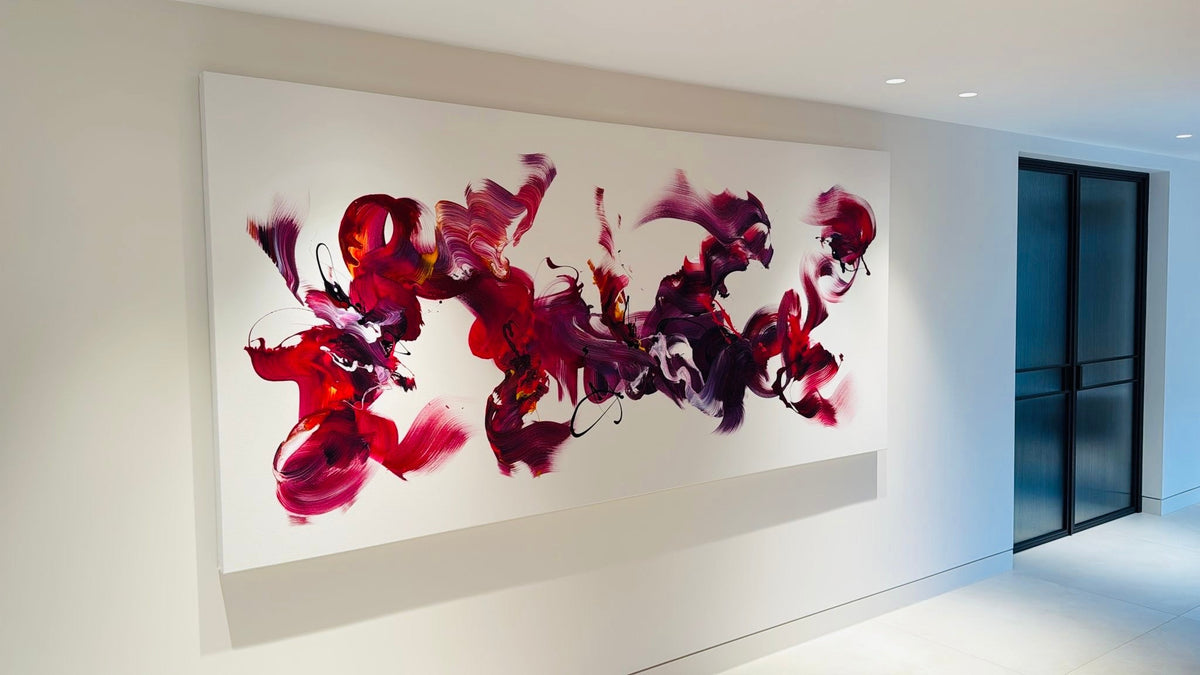
Share:
A Painting Made for a Place: How a Commission Takes Shape