From the studio / The creative process
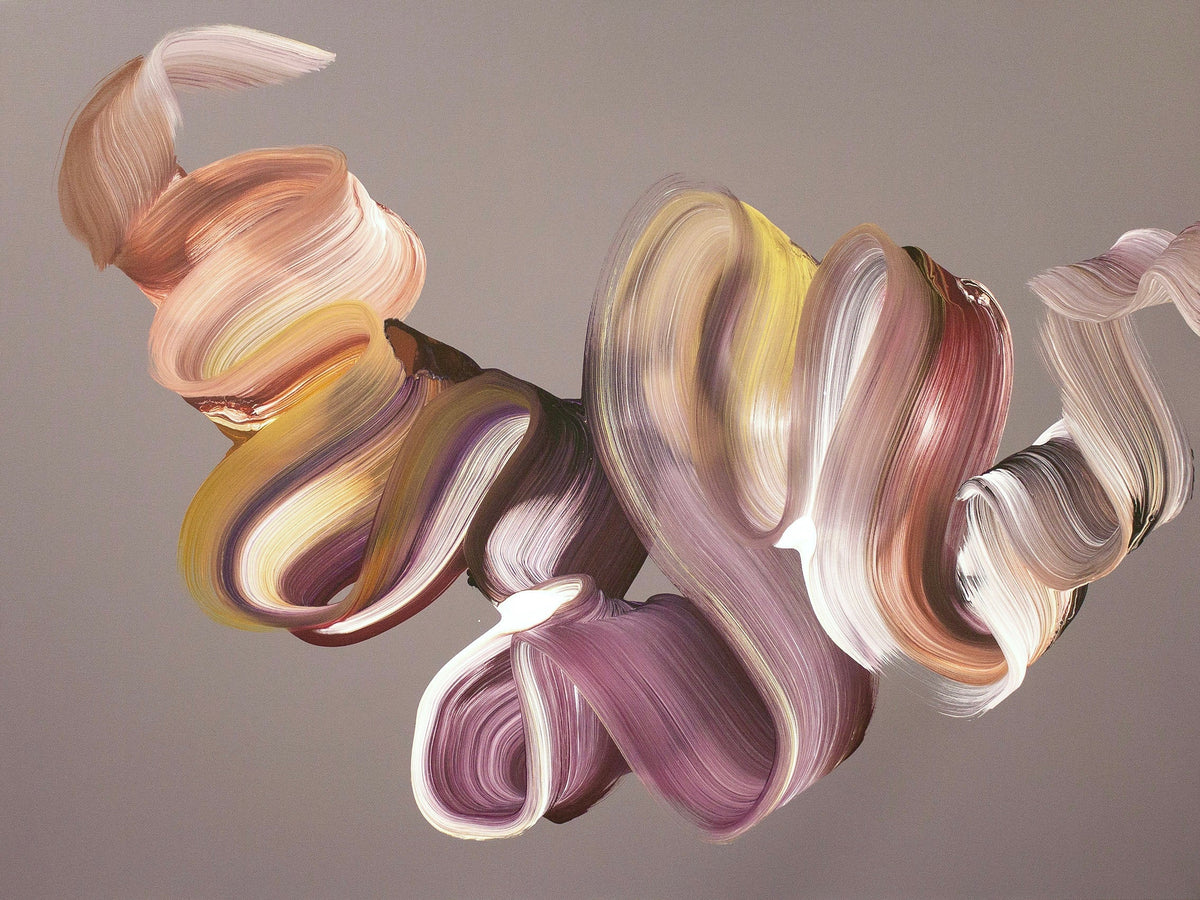
Before I pick up a brush, I rarely know exactly where a painting will go. There may be a colour in mind or a feeling I want to explore, but the rest takes shape as I work.
I often paint at night, when the studio is quiet and music is playing. It gives me room to work without rushing towards an outcome. Some paintings come together almost immediately. I enjoy experimenting with different colours and brushstrokes, seeing what works as I go.
For me, abstract painting is a way of understanding what I am feeling, even when I cannot quite explain it.
01 / Intuition
Where a painting begins
I don't usually begin with a subject or a carefully planned composition. It might be restlessness, excitement, a memory or simply a sense of calm that leads me towards the canvas.
Sometimes the first few brushstrokes set everything in motion. At other times I need to step away, look again and allow the painting to develop more slowly. I enjoy that uncertainty. If I knew precisely what the finished work would look like, much of the pleasure would disappear.

02 / Colour and feeling
Letting colour lead
Colour often tells me more than words. Some days I am drawn towards deep reds and warmer tones. On others, I want space, softness or the quietness of blues and greens.
I don't believe a particular colour has to mean the same thing to everybody. What feels energising to one person may feel comforting to another. That freedom to respond differently is one of the things I love about abstract art.
I build the surface gradually, layering colour, lifting it away and allowing earlier brushstrokes to remain visible. Those layers give a painting its history.


03 / Gesture and movement
The physical side of painting
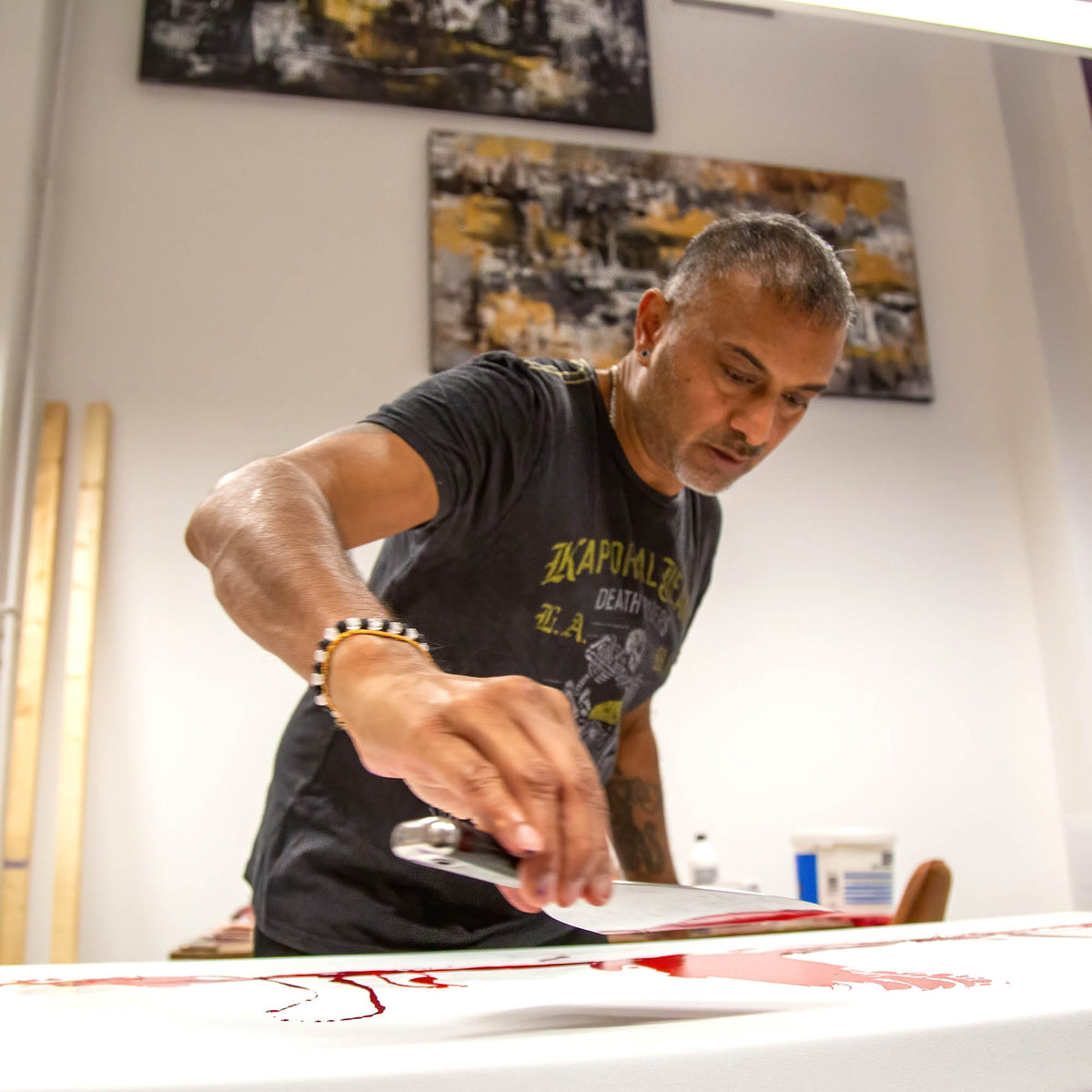
Working on a large canvas allows me to move freely. My arm, shoulder and whole body become involved, and the pace of those movements can change completely during a painting session.
Sometimes I paint with broad, confident brushstrokes. Other times I work slowly, adjusting colours until they feel right together.
I often step back to see how the colours sit together. Something that felt right an hour earlier might need changing. I keep working until the painting feels balanced.
04 / The finishing point
Knowing when to stop
People sometimes ask how I know a painting is finished. There isn't a fixed method. I might leave a work alone for a while, then return to it with fresh eyes.
Eventually, there is a point when adding another brushstroke would take something away rather than improve it. The painting feels settled, even if parts of it remain unpredictable. That is usually when I know I can leave it.
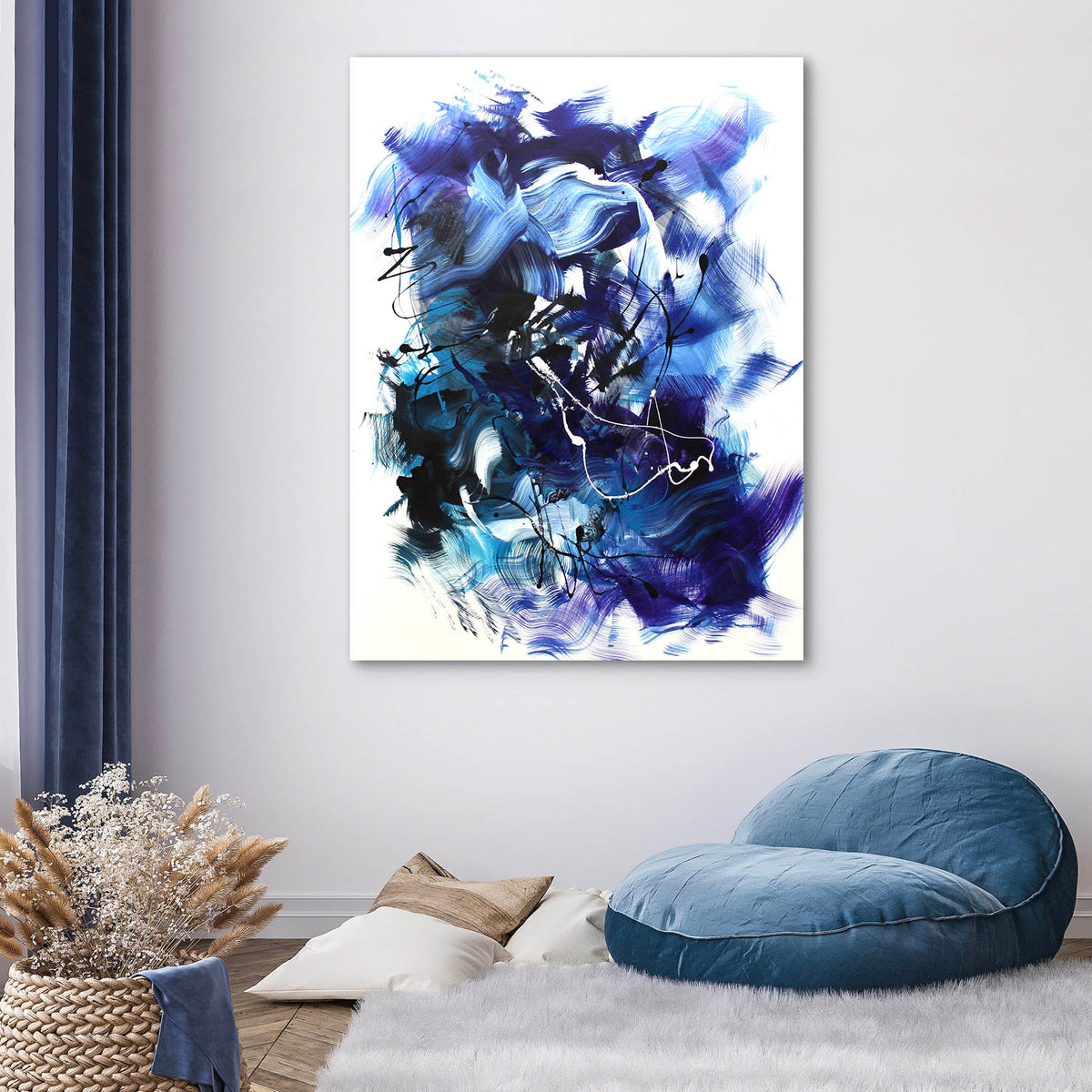
I love seeing my paintings in people’s homes. It means a lot to know that someone likes a piece enough to live with it every day.
05 / Living with art
Choosing a painting that stays with you
When looking at original art, I always encourage people to pay attention to their first response. Look at the colour, the movement and the details, but notice how the painting makes you feel as well.
An original painting is something you can live with for many years. It should continue to hold your attention, even as your surroundings and tastes change.
Paresh Nrshinga FRSA
Share:
A Note from the Studio | Paresh Nrshinga
How to Choose the Right Size Painting for a Large Wall