The journal / Collecting original art
Value beyond
the price.
There are many reasons to buy an original painting. Some are practical, some are personal, and not all of them can be measured in money.
Collecting art can be a lasting pleasure. It can also involve financial questions worth understanding before you buy. The best starting point is knowing the difference between living with a work you love and expecting it to deliver a financial return.

01 / The meaning of value
Why do people invest in original art?
People acquire art for different reasons. A painting may become the centre of a home, mark an important occasion or introduce them to an artist whose work they want to follow. Some collectors are also interested in potential resale value.
These motivations are not interchangeable. Enjoying a painting does not depend on a future buyer paying more for it. Treating art as a financial investment, however, requires a clear understanding of the risks and costs.
Original abstract art brings a particular experience of colour, movement and surface. The way a work continues to hold your attention may be the most immediate value of owning it.
02 / A measured view
Is original art a good financial investment?
An original painting can have monetary value, but it is not a predictable investment. Some works appreciate, others do not, and there may be no ready buyer when an owner wishes to sell. The price achieved by one artist or artwork is not a reliable forecast for another.
Resale can involve gallery or auction fees, transport, insurance, condition assessments and time. An asking price is not the same as a completed sale, and artwork is not necessarily easy to sell quickly.
If your primary goal is financial growth, approach art with caution. For a personal collection, choose a painting that you would still be pleased to own if its market price never rose.

03 / The original work
What makes an original painting worth collecting?
An original canvas carries the artist's particular gestures and decisions. Layers of paint, changes in direction and individual marks give the work its character. You can return to those details years after first seeing the painting.
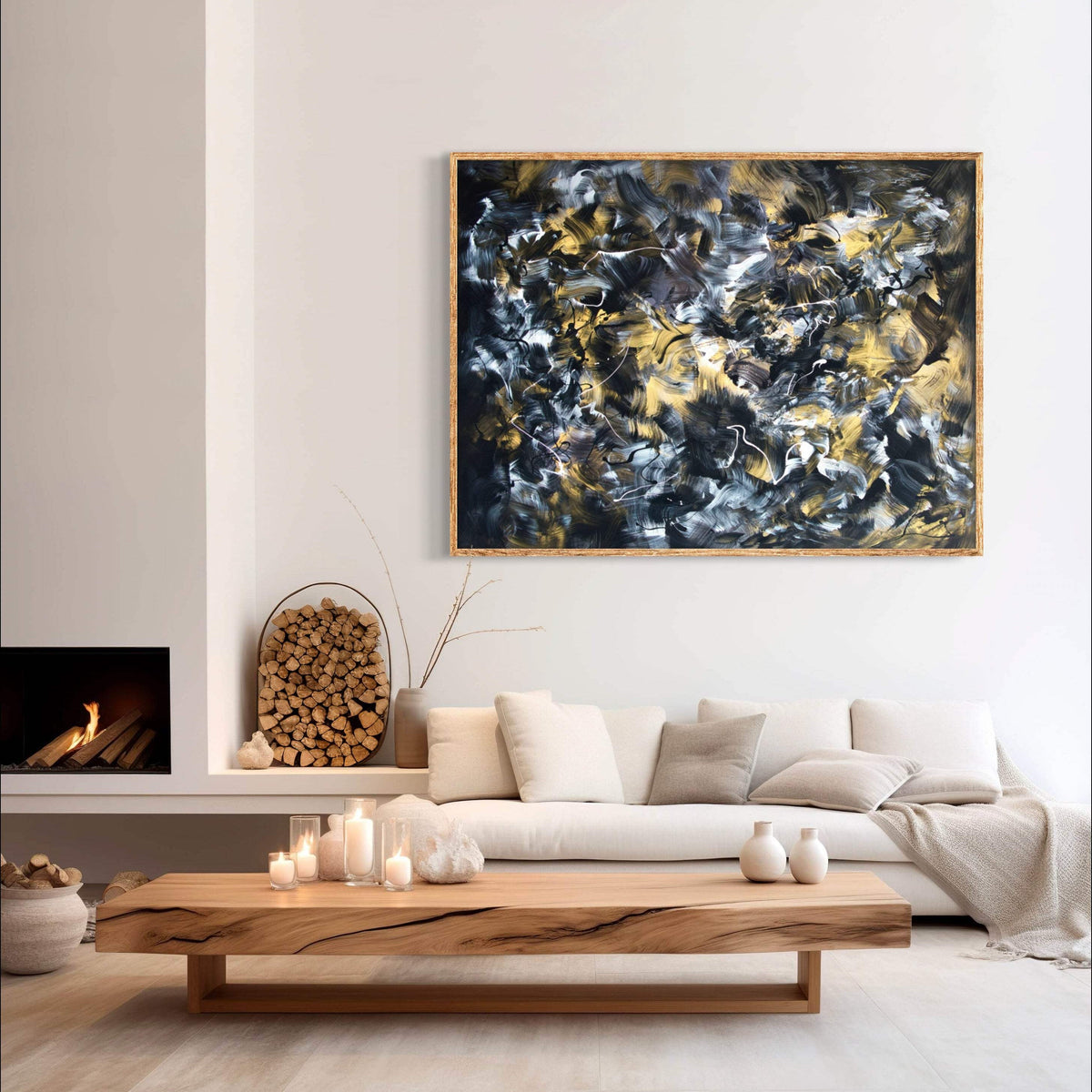
Golden Dust brings together black and white in expressive contrast. The movement and texture belong to the original painted surface, rather than being a pattern selected merely to match a room.
Materials, craftsmanship, scale, artistic development and provenance are all relevant when considering a work. None automatically guarantees a higher resale price. They help you understand what you are choosing and why.
04 / The artist's development
Should you choose an established or emerging artist?
Start with the work itself. Learn about the artist's practice, materials, body of work and exhibition history. This helps you understand a painting in context, without speculation about future fame.
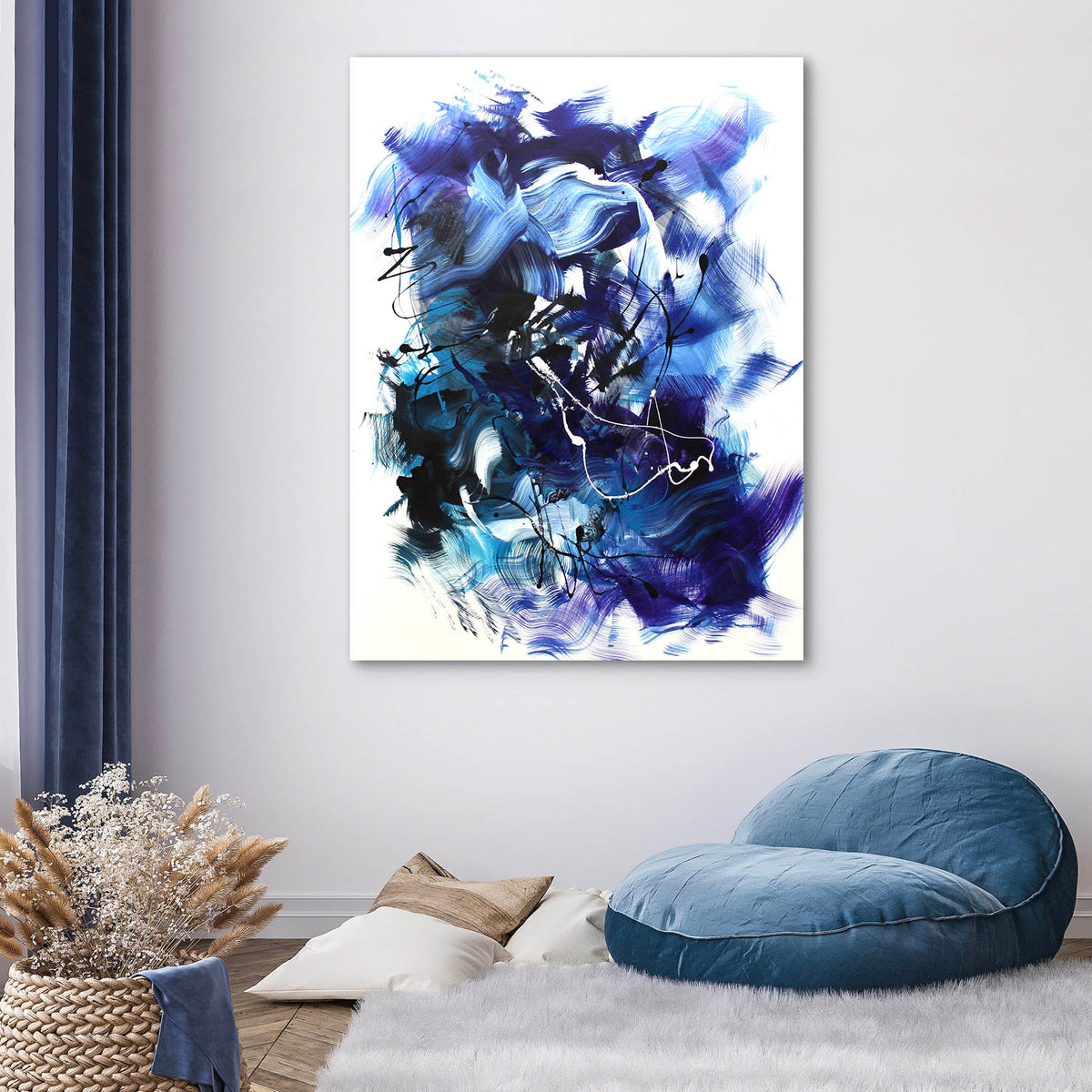
Paresh Nrshinga FRSA is a London-based contemporary abstract artist whose paintings explore colour, movement and layered gesture. Emerald Echoes, for example, brings teal, turquoise, emerald and taupe together in a fluid original composition.
An artist's career can develop in unexpected ways. There is no certainty that those changes will increase the resale price of any particular painting.


05 / Buying confidently
What should you check before buying original art?
Check the artwork's exact dimensions, medium, title and year, with clear photographs of the full painting and its details. Confirm its signature, certificate of authenticity, condition and finish.
Keep the invoice, certificate and any correspondence about the work. These records help establish what you own, where it came from and when you acquired it. For larger purchases, consider insurance and transport arrangements.
True Romance I combines red, maroon, black and white across a square original canvas. Its listed dimensions and individual painted details are as important to understand as the way the painting feels in your room.
06 / Living with the work
Does collecting art have value beyond resale?
Yes, although that value is personal rather than financial. A painting can become part of the memories associated with a home. It may change how a wall feels, complement the architecture or simply be something you continue to enjoy.
Original art can also open conversations about colour, creative practice and the person who made the work. Purchasing directly supports the artist's continued practice.
The market price of a painting may change, while its significance to its owner can remain. Those are two different kinds of value.
07 / Looking after a collection
How do you protect an original painting over time?
Protect the canvas from prolonged direct sunlight, damp and sudden extremes of temperature. Hang it securely and keep records of its dimensions and condition. If specialist conservation is needed, seek appropriate advice rather than trying to repair the surface yourself.
Captured Dream is an earlier original work by Paresh Nrshinga with maroon tones and a layered composition. Caring for a painting helps preserve both the physical artwork and the pleasure of living with it.
Good records and careful handling also matter if you eventually lend, move or sell a work. They do not guarantee its future price, but they reduce avoidable uncertainty.

08 / A personal beginning
How do you start collecting original abstract art?
Begin with paintings you genuinely want to spend time with. Look beyond the first photograph, explore the artist's other works and consider how the composition feels at different distances. There is no need to fill every wall at once.
Check the practical details before choosing. The exact size and orientation determine how a painting fits your space, while close-up photographs help reveal colour and texture. Our guide to choosing abstract art for your home covers placement in more detail.
Explore the collection of original paintings or contact the studio to ask about a particular work. A considered purchase begins with curiosity, not pressure.
A final thought
Collect what matters.
An original painting can have personal, cultural and financial significance, but those things are not the same. Choose a work because you genuinely want to live with it. Any future market value remains uncertain.
Explore original paintingsThis article provides general information about collecting art and is not personal financial or investment advice.

Share:
What Makes Original Art Special? | Art Nrshinga
Art and Wellbeing | A Personal Connection