
The journal / Art, perception and attention
What makes us
look again?
A painting can catch your attention in an instant. Then, almost without noticing, you begin to follow the movement of a line, recognise something in a shape or return to one particular colour.
Why does that happen? Research into art and the brain offers some interesting clues. There is still much to learn, but it gives us another way to think about the individual experience of looking at original abstract art.
01 / The act of looking
What happens in the brain when we look at art?
Our eyes register shapes, colour, contrast and light. The brain begins organising that visual information, while attention helps determine what we notice first and what we return to. This process is not unique to art, but a painting offers an unusually rich surface to explore.
An original abstract canvas does not have to represent a person or place to hold our attention. A sweeping mark can suggest movement, a quiet area can create a pause, and a change in colour may encourage us to look more closely.
That is part of the pleasure of abstract art. We may start with an immediate impression and discover something more personal the longer we spend with the work.

02 / Colour, contrast and movement
Why do our eyes follow some parts of a painting first?
Bold contrasts, changes of direction and repeated shapes can guide the eye across a composition. The artist decides where to create visual energy and where to leave quieter space, giving the viewer different ways into the work.
Echoes Of Power brings black, white and red into a confident arrangement. Its decisive gestures create immediate impact, while the contrast between densely painted passages and open space gives the eye somewhere else to travel.
There is no guaranteed sequence in which everyone will look. Your own interests, the size of the work and even the light in the room influence what stands out.
03 / The search for meaning
Why do we see familiar shapes in abstract paintings?
People often recognise patterns in incomplete or ambiguous visual information. A gesture may resemble a branch, a horizon or something from a remembered place, even when the painting was never intended to depict it.
With Rainforest Breeze, the movement of green and the organic gestures can suggest the rhythm of nature. Another viewer may simply enjoy the relationship between the painted marks. Both experiences are possible without assigning a single subject to the work.
Abstract art leaves interpretation open. Looking for something familiar can be part of the experience, but it is equally rewarding to appreciate the painting as colour and composition.


04 / Emotion and association
Can a painting bring back memories or emotions?
Colours, shapes and arrangements may remind us of places, people or earlier experiences. Our response is shaped by personal associations as much as by the painting itself, so one work can feel quite different to different people.
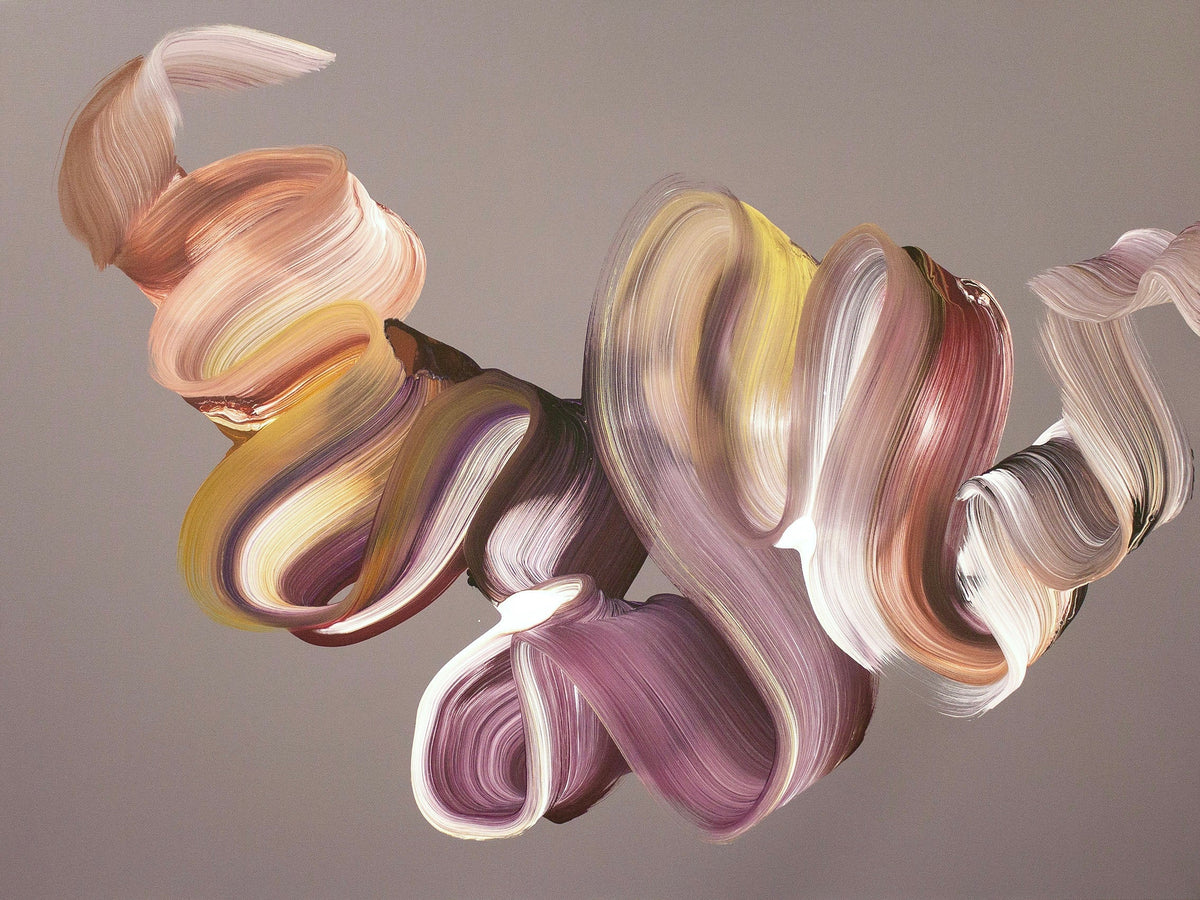
Whispers Of Light layers rose, magenta, coral, violet and soft blue. Some viewers may respond first to its warmth, others to its movement or quieter tonal changes. There is no universal emotional message that its colours must communicate.
When a painting feels meaningful, you do not need to explain exactly why. Part of its character comes from the freedom to make your own connection.
05 / What the research says
What does neuroscience tell us about looking at art?
Researchers in neuroaesthetics study how we perceive and respond to aesthetic experiences. Studies of people viewing artworks have explored the involvement of visual processing, reward-related systems and the default mode network, which is associated with internally directed thought.
A peer-reviewed brain-imaging study examined how responses to artworks changed over time. The findings suggest that personal appreciation involves more than a quick glance, although brain scans cannot tell us what every individual will feel.
The American Psychological Association also describes developing research into how art engages attention, meaning and self-reflection. This is a growing field, not a settled formula for how any painting affects every brain.
06 / The value of time
Does looking at a painting for longer change what we notice?
It often can. Your first impression might be the dominant colour or overall shape. Look a little longer and a delicate line, a shift of tone or a small mark may begin to matter just as much.
Fields Of Serenity uses horizontal layers of green, olive and soft yellow. At first the arrangement may suggest openness and space; closer examination reveals the relationship between the lighter passages and the darker centre.
Looking longer is not a test. There is no set amount of time needed to appreciate a work. Give yourself permission to notice whatever catches your attention, then return to it another day.

07 / A different reading
Why do two people interpret the same artwork differently?
An abstract painting does not arrive with a single correct meaning. Every viewer brings their own memories, experiences and visual interests, and these can change over time.
One person may be drawn to a particular rhythm in the brushwork, while another notices the colours or the way the painting sits in the room. Even the artist's intentions need not define the entire experience of a work.
That openness is one reason original art can invite conversation. People may look at the same canvas and find different things to enjoy.

08 / Art in daily life
Can living with art enrich the way we experience a room?
An original painting can become a familiar presence without becoming invisible. On some days you notice it in passing; at other times a different light or mood draws your attention back to its surface.
Golden Shadows balances bronze, brown and gold with deeper areas of contrast. Its atmosphere can appear different as natural light shifts across the room, revealing another detail in the work.
A World Health Organization review considers evidence about arts engagement and wellbeing across many settings and activities. It should not be read as a promise that owning a particular painting has a medical effect. The everyday pleasure of noticing and living with art is worthwhile in its own right.
09 / Finding your own connection
How do you choose abstract art you will want to keep looking at?
Begin with the painting that holds your interest. Notice where your eye travels, which details you return to and how the composition feels as a whole. It is fine to enjoy a work without being able to put the reason into words.
Check the original canvas dimensions, orientation and close-up photographs. In-situ images are useful for imagining a painting in a room, but the measurements on the artwork page are essential for understanding its scale.
Explore original abstract paintings by Paresh Nrshinga, or read Inside the Studio to discover more about his approach to gesture, colour and composition.
A final thought
There is always something more to see.
A painting does not have to give the same answer to everyone. Its appeal can lie in the first impression, an unexpected memory or a small detail discovered years later. The important part is the relationship you form with the work.
Explore original paintings

Share:
Colour Psychology at Home | Beyond the Rules
What Makes Original Art Special? | Art Nrshinga